What Is Microdosing? A Complete Beginner's Guide
Learn what microdosing magic mushrooms means, including psilocybin effects, reported benefits, safety risks, research & protocols.
Magic Mushroom Delivery Canada
8/11/20248 min read
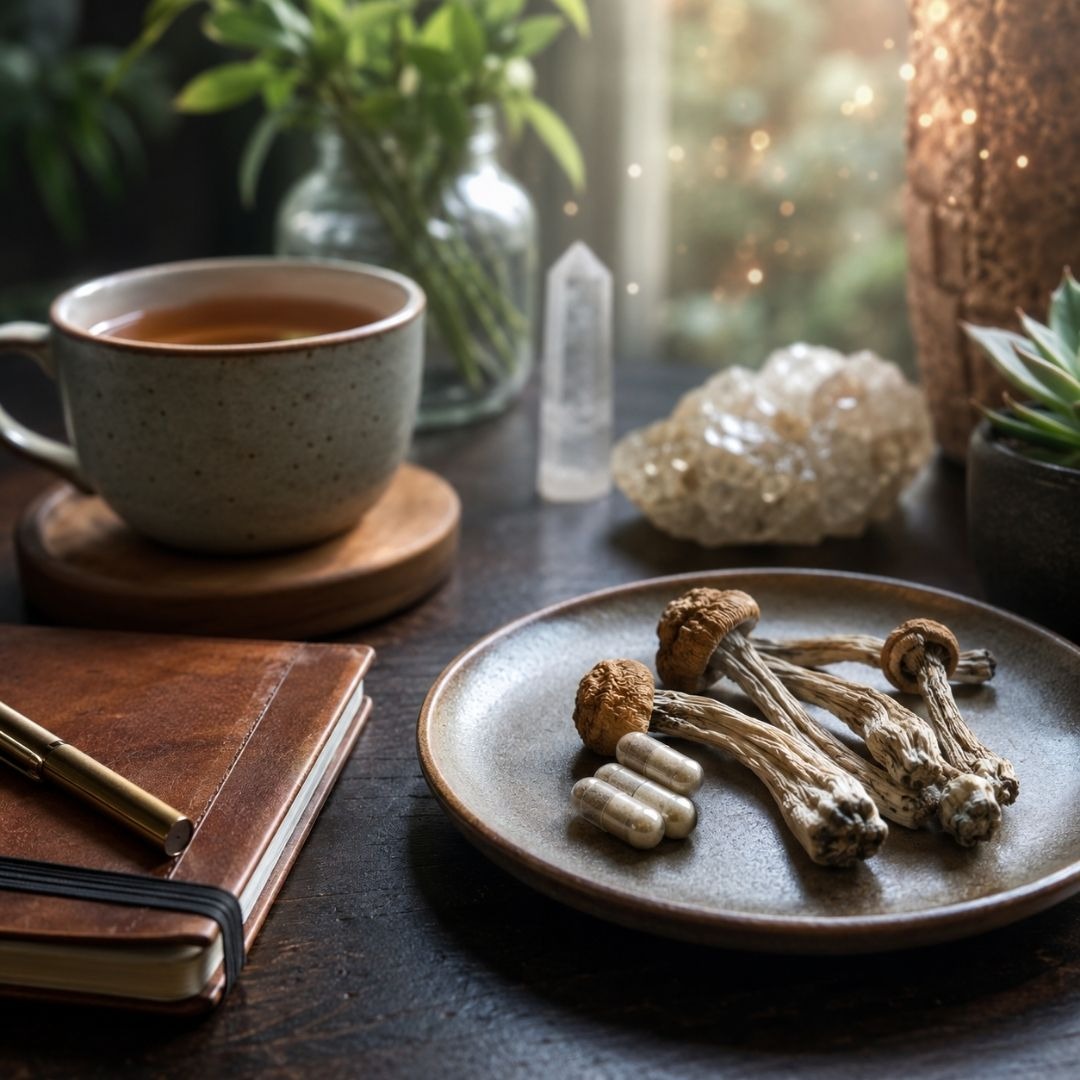

Microdosing has gone from a quiet internet trend to one of the biggest conversations in psychedelic wellness. People talk about it for mood, focus, creativity, productivity, anxiety, depression, and emotional balance.
But what exactly does the practice involve, and how does it affect the mind and body?
Simply put, microdosing is the practice of taking a very small, sub-perceptual amount of a psychedelic substance like magic mushrooms. “Sub-perceptual” means the amount is small enough that it should not cause hallucinations, visual distortions, or a full psychedelic trip.
When people talk about microdosing magic mushrooms, they are specifically talking about microdosing psilocybin—the primary active psychedelic compound found in shrooms.
The fundamental goal of microdosing is not to get high. Instead, the goal is to experience subtle, background changes in daily well-being while staying completely grounded and going through a normal day.
This comprehensive guide will explain exactly what microdosing is, how it affects the brain, what the current research says, the safety and legal risks involved, and two of the most popular microdosing protocols used today.
What Is Microdosing?
Microdosing is the routine use of minimal, non-recreational amounts of a psychedelic substance. In this guide, we will focus specifically on psilocybin, the naturally occurring compound found in magic mushrooms (also commonly referred to as shrooms, psychedelic mushrooms, or mushies).
For a deeper dive into the history, types, and biology of these fungi, check out our complete beginner's guide to magic mushrooms.
The core philosophy of microdosing is that the dose must stay below the threshold of a full psychedelic experience. While a recreational or therapeutic dose causes profound shifts in perception, time, emotions, and sensory visuals, a microdose is designed to be light, functional, and integrated into everyday life.
Because users are not seeking to alter their reality but rather to optimize their clarity, calm, or focus, microdosing has evolved into a mainstream wellness and self-improvement practice rather than a recreational activity.
Microdosing vs Macrodosing
To understand microdosing, it is critical to understand what it is not. Many beginners confuse microdosing with taking a "light trip," but the two experiences serve entirely different purposes.
Sub-Perceptual vs. Altered States
A full psychedelic dose, often called a macrodose, is intended to produce a highly noticeable altered state of consciousness. It radically changes perception, memory, and sensory inputs, leading to what many describe as deeply meaningful, spiritual, or sometimes overwhelming experiences.
A microdose, being sub-perceptual, remains entirely in the background. If you are seeing geometric patterns, experiencing waves of intoxication, or feeling unable to perform everyday tasks, you are no longer microdosing—you are macrodosing.
What is a Microdose?
Typical Amount: 100mg to 300mg (0.1g – 0.3g)
Primary Intent: Daily focus, flow states, emotional balance
Delivery Method: Precisely measured microdose capsules
Mental State: Fully grounded, functional, sober
What is a Macrodose?
Typical Amount: 1.5g to 2.5g+ (1500mg – 2500mg+)
Primary Intent: Deep self-reflection, therapeutic breakthrough
Delivery Method: Whole dried mushrooms, teas, or edibles
Mental State: Altered perception, visuals, time distortion
Note: Because most prominent clinical studies on psilocybin therapy involve large macrodoses administered in highly controlled settings with professional preparation and integration, those therapeutic results do not automatically apply to self-directed daily microdosing.
The Science: How Psilocybin Affects the Brain
The biological mechanics of psilocybin are vastly different from other stimulants like caffein or other recreational substances.
Psilocybin, Psilocin, and Serotonin Receptors
Psilocybin itself is a prodrug—a substance that is biologically inactive until the body breaks it down. Once ingested, your metabolism converts psilocybin into psilocin.
Psilocin shares a remarkably similar chemical structure to serotonin, a major neurotransmitter heavily involved in regulating mood, perception, sleep, appetite, and emotional processing. Because of this structural similarity, psilocin can directly bind to serotonin receptors in the brain. At microdose levels, this chemical interplay is thought to subtly influence how the brain processes thoughts and emotional data without overloading the sensory centers.
Want to learn more? Dive into our breakdown of 10 Surprising Facts About Psilocybin
Neuroplasticity and Flow States
In contemporary psychedelic research, scientists are highly focused on neuroplasticity—the brain’s structural ability to adapt, grow, and forge new neural connections. Early data suggests that psilocybin may promote flexibility in emotional habits and thought patterns.
This potential for cognitive flexibility is exactly why microdosing has exploded in popularity across highly competitive, creative, and entrepreneurial spaces. Enthusiasts frequently report that it helps them slide effortlessly into flow states—periods of deep, uninterrupted focus where professional or creative tasks feel less resistant and more intuitive.
However, it is important to remember that human biology is highly individual. Factors like sleep quality, base stress levels, unique body chemistry, and personal expectations mean that no two experiences are identical. Furthermore, natural mushroom potency can vary significantly from batch to batch. While one person may feel calm and sharp, another might feel distracted or overstimulated on the exact same milligram dose.
Why Do People Microdose? Expectations vs. Evidence)
The Motivations Behind Microdosing
People explore microdosing for a broad range of personal objectives, including mood elevation, focus, problem-solving, and general curiosity. In creative and everyday lifestyle circles, enthusiasts often report that a microdose provides a subtle sensory lift, making music, nature, or conversation feel distinctly more engaging and interesting.
However, separating the true pharmacological effects from the psychological ones is complex. Because microdosing is surrounded by immense online hype, many users approach the practice with deep hope, strong intentions, and an active desire for personal change. This mindset creates a powerful placebo effect. If someone firmly believes a capsule will unlock their creativity or calm their mind, they naturally become hypersensitive to noticing creative or calm moments throughout their day.
What the Double-Blind Research Says
When clinical researchers attempt to isolate the substance from the hype using double-blind, placebo-controlled studies, the results are deeply fascinating. In these clinical trials, researchers found that while low doses of psilocybin did create noticeable changes in brain rhythms and distinct subjective feelings, they did not reliably outperform placebos when measuring concrete improvements in well-being, creativity, or raw cognitive performance. This suggests that while the chemical interaction in the brain is real, a user's routine, mindset, and lifestyle play an equally massive role in the overall outcome.
Common Microdosing Protocols
Taking psilocybin every single day is highly inefficient because the human brain builds a rapid chemical tolerance to psychedelics. To prevent this, experienced practitioners utilize structured schedules, or "protocols," that intentionally incorporate rest days to allow the body's receptors to reset.
The Fadiman Protocol
Developed by pioneering psychologist Dr. James Fadiman, this is the most famous framework for beginners. It operates on a strict three-day cycle designed to help users track the contrast between dosing and non-dosing days:
Day 1 (Dose Day): Take your microdose capsule in the morning and log your mood, energy, and focus.
Day 2 (Transition/Afterglow Day): Take no dose. Observe if any subtle, residual positive effects carry over from the day before.
Day 3 (Reset Day): Take no dose. This allows your system to clear out any remaining tolerance.
For a complete step-by-step breakdown of how to track this routine, see our full guide on what is the Fadiman Protocol of microdosing.
The Stamets Stack
Named after celebrated mycologist Paul Stamets, this advanced protocol takes a synergistic approach by combining microdoses of psilocybin with functional mushrooms and vitamins:
Psilocybin Mushrooms: 0.1g to 0.3g of dried mushroom powder.
Lion’s Mane Mushroom: 500mg to 1,000mg of powder or extract (utilized to support natural neurogenesis and cognitive health).
Niacin (Vitamin B3): 100mg to 200mg of flushing niacin (included to temporarily dilate blood vessels, theoretically helping the active compounds reach deeper into the peripheral nervous system).
The standard schedule for the Stamets Stack is 4 consecutive dosing days followed by 3 days off (or alternatively, 5 days on and 2 days off) to ensure tolerance is completely mitigated.
Intuitive Microdosing
Intuitive microdosing means people do not follow a strict schedule. Instead, they choose days based on mood, goals, or personal preference.
The downside is that it is harder to track. Without structure, people may confuse real effects with normal changes in mood, sleep, stress, or routine.
Safety, Side Effects & Real Risks of Microdosing
A primary appeal of magic mushrooms is their physiological profile: they are completely natural, inherently non-toxic to vital organs, and non-addictive. However, "natural" does not mean entirely risk-free. Because psilocybin amplifies mental and emotional sensitivity, it can introduce real psychological and practical challenges.
Common Reported Side Effects
While many users report enhanced mood and patience, others experience adverse reactions. The most common physical and mental side effects include:
Increased acute anxiety or a sense of nervous restlessness
Mild physical overstimulation (similar to consuming too much caffeine)
Temporary tension headaches or mild nausea during the onset phase
Disrupted sleep patterns or insomnia if taken too late in the day
Mental Health Contraindications
Psilocybin acts as a powerful emotional accelerator. Because of this, public health organizations like Health Canada warn that psilocybin is fundamentally unsafe for individuals managing specific mental health conditions. Those with a personal or immediate family history of schizophrenia, psychosis, schizoaffective disorder, or severe bipolar disorder face a heightened risk of psychological destabilization and should avoid microdosing entirely.
Medication Interactions
Because psilocin binds directly to serotonin pathways, microdosing can interact unpredictably with pharmaceutical medications that target the same systems. This is an essential safety concern for anyone currently taking antidepressants (SSRIs, SNRIs, MAOIs), lithium, stimulants, or mood stabilizers. If you are taking prescription psychiatric medications, you should always consult a qualified healthcare professional before introducing a microdosing routine.
Microdosing Is Not a Guaranteed Fix
It is vital to understand that microdosing should never be approached as a magic bullet or a guaranteed cure for deep-seated anxiety, depression, or trauma. A sub-perceptual supplement cannot outwork a lack of foundational health. Microdosing is not a replacement for professional therapy, proper medical care, consistent sleep, physical exercise, and meaningful social connection. Real mental wellness requires a holistic framework rather than relying strictly on any single substance.
Related: To understand how these safety factors change when moving beyond sub-perceptual doses, explore our complete guide on the risks of magic mushrooms.
The Legal Landscape of Microdosing in Canada
Understanding the legal realities of psilocybin requires looking at both the official letter of the law and how it functions in daily life.
On Paper: The Federal Framework
Federally, psilocybin and psilocin are classified as Schedule III controlled substances under Canada's Controlled Drugs and Substances Act. According to Health Canada, unauthorized production, sale, or possession remains technically illegal. Officially, authorized legal access is strictly funneled through specialized clinical trials, Section 56 exemptions, or medical requests granted via the Special Access Program (SAP).
In Practice: The Real-World Market
Despite the federal restrictions on paper, the real-world landscape across Canada tells a completely different story. Mirroring the years leading up to cannabis legalization, magic mushrooms have become widely accessible to Canadian consumers.
Through an extensive network of mail-order e-commerce websites, local same-day delivery services, and physical storefront dispensaries operating openly in major metropolitan hubs, the market functions in a highly visible grey area. Because municipal law enforcement and public health priorities are focused on toxic synthetic drug crises rather than the personal use of natural psychedelics, the actual day-to-day risk to an individual purchasing personal-scale microdose capsules is exceptionally low.
Conclusion: What is Microdosing?
Microdosing mushrooms is the deliberate practice of taking minimal, sub-perceptual amounts of psilocybin. Rather than seeking a recreational escape or a full psychedelic trip, users utilize it as a gentle, plant-based alternative to support mental wellness, focus, and clarity without the heavy physical fog or emotional numbing sometimes associated with synthetic pharmaceuticals.
While the online conversation continues to outpace clinical data, current scientific research is actively expanding. Prominent Canadian institutions—such as the University of Toronto Mississauga’s Psychedelic Studies Research Program and Queen’s University—are currently conducting controlled clinical trials to carefully measure the true efficacy of microdosing beyond the placebo effect.
Ultimately, microdosing is a highly individual journey. Beginners should approach it by looking past the online hype, respecting the psychological risks, and starting with a balanced, cautious mindset.
FAQs About Microdosing
What does a microdose actually feel like?
A proper microdose should not feel like a "high." It operates entirely in the background. Users generally describe it as a slightly better, clearer day—characterized by subtle lifts in mood, slightly sharper focus, or extra patience during everyday tasks.
Will microdosing mushrooms make me hallucinate?
No. By definition, a microdose is sub-perceptual. If you notice any visual distortions, shifting patterns, or changes in your surroundings, your dose is too high and you have entered macrodose territory.
How do people typically take a microdose?
Because consistency and precision are vital to a successful protocol, dried magic mushrooms are typically ground into a uniform powder and placed into precisely measured, pre-dosed capsules (usually ranging from 100mg to 300mg).
Is microdosing a proven cure for anxiety or depression?
No. While many individuals share deeply inspiring personal stories of emotional relief, microdosing is not a proven medical treatment or a guaranteed fix. It should never be viewed as an immediate replacement for professional therapy, prescription medical care, proper sleep, and proven lifestyle habits.
About Magic Mushroom Delivery Canada
Since 2020, our team has been providing premium magic mushroom delivery across Canada.
In addition to creating helpful educational guides like this one, we are proud to offer Canadians the most affordable $25 microdose packs to ensure the benefits of psilocybin stay accessible to everyone.
If you are ready to explore our curated selection of high-quality products, click here to browse our online magic mushroom dispensary and experience safe, discreet delivery right to your door.
Quick Links
2026 MAGIC MUSHROOM DELIVERY CANADA
HELPING CANADIANS SAFELY ACCESS PSILOCYBIN SINCE 2020


Canada's premier source for organic magic mushrooms, microdose capsules & psilocybin edibles since 2020.
Contact
Alberta • British Columbia • Manitoba • New Brunswick • Newfoundland & Labrador • Northwest Territories • Nova Scotia • Nunavut • Ontario • Prince Edward Island • Quebec • Saskatchewan • Yukon Territory
Service Areas