Are Magic Mushrooms Addictive?
Are magic mushrooms addictive? Learn how psilocybin affects the brain, builds tolerance & differs from physical dependence or withdrawal.
Magic Mushroom Delivery Canada
9/21/20259 min read
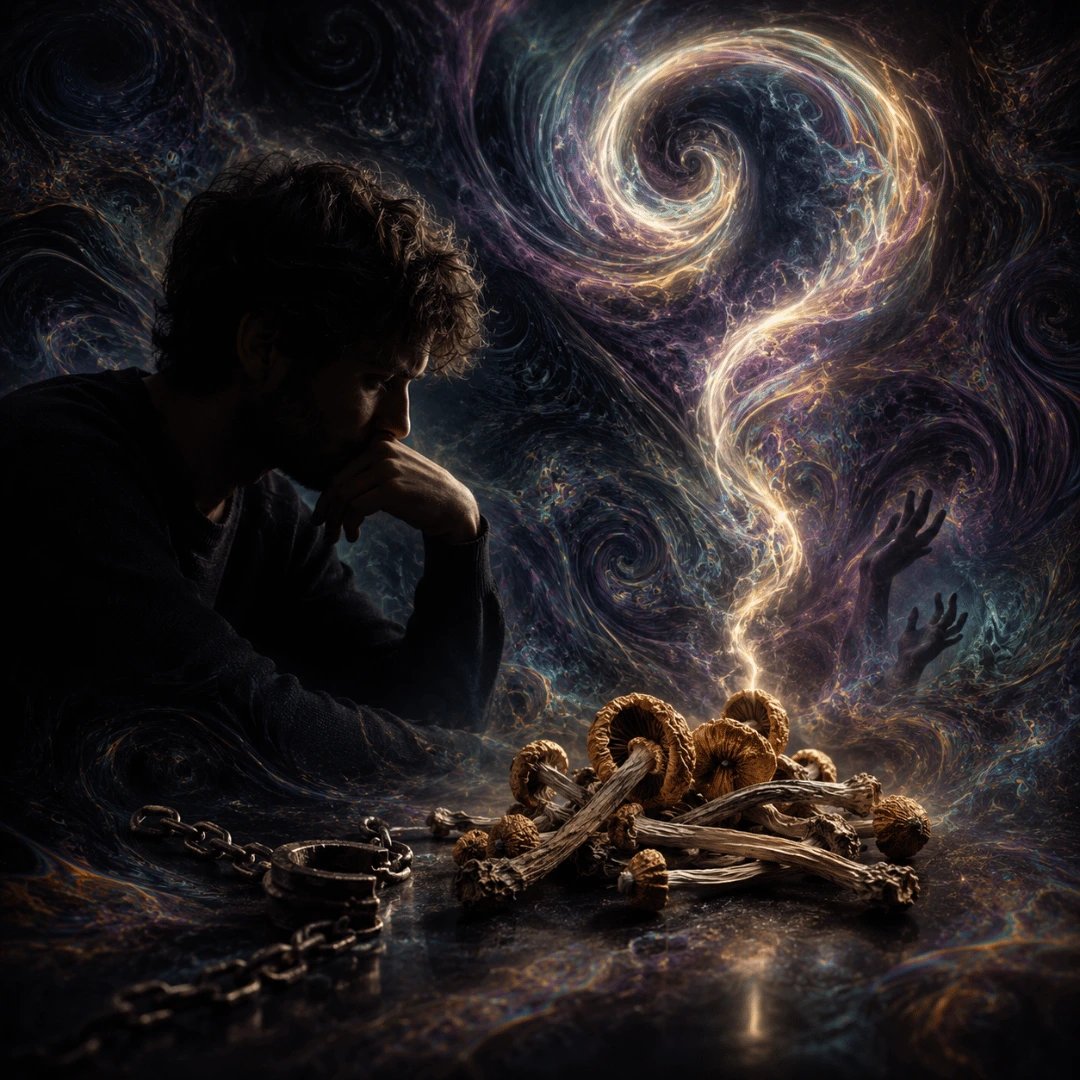
Magic mushrooms are one of the most misunderstood psychedelics. Some people talk about them like they are completely harmless. Others talk about them like they are just as addictive as alcohol, nicotine, opioids, or stimulants.
The truth is more balanced.
No, magic mushrooms are not considered physically addictive in the traditional sense. Psilocybin does not usually cause compulsive drug-seeking, severe physical withdrawal, or the same reward-system dependence seen with many addictive substances.
However, that does not mean magic mushrooms are risk-free.
Some people can develop a psychological dependence if they begin using mushrooms to escape reality, avoid emotions, chase spiritual experiences, or cope with stress. The physical addiction risk is low, but an unhealthy relationship with the experience can still happen.
There is also another important detail. Psilocybin tolerance builds very quickly. After repeated use over a few days, the same amount may stop producing the same effects. This makes daily use less common, but it does not make problematic use impossible.
This guide will explain what magic mushrooms are, how psilocybin affects the brain, what the effects feel like, why magic mushrooms are not addictive in the traditional sense, and when mushroom use may become a problem.
What Are Magic Mushrooms?
Magic mushrooms are psychedelic fungi that naturally contain psilocybin. They are also called shrooms, psilocybin mushrooms, psychedelic mushrooms, or hallucinogenic mushrooms.
They can change how a person thinks, feels, sees, hears, and experiences reality. These changes can feel meaningful, strange, emotional, confusing, peaceful, or overwhelming depending on the person and the situation.
Magic mushrooms are classified as hallucinogens because they can affect perception. This does not always mean someone sees things that are not there. It can also mean colours feel brighter, sounds feel deeper, time feels different, thoughts feel more intense, or emotions feel amplified.
For a deeper dive into these natural psilocybin-containing fungi, read our beginner-friendly guide: What Are Magic Mushrooms?
What Is Psilocybin?
Psilocybin is the main psychedelic compound found in magic mushrooms.
When someone consumes psilocybin, the body converts it into psilocin. Psilocin is the compound that interacts with serotonin receptors in the brain. Serotonin is involved in mood, perception, emotions, sleep, appetite, and thinking.
This is why psilocybin can strongly affect mood, sensory perception, emotional awareness, and the way a person understands themselves or their surroundings.
How Does Psilocybin Affect the Brain?
Psilocybin affects the brain mainly through serotonin receptors, especially receptors linked to mood and perception.
In simple terms, psilocybin can temporarily change how different parts of the brain communicate. This can make normal thoughts, emotions, memories, and sensory information feel different than usual.
For some people, this may feel calming, insightful, or emotionally open. For others, it may feel confusing, intense, or scary. To learn more about how psilocybin works in the brain, read our guide on surprising psilocybin facts.
Why the Experience Can Feel So Different From Person to Person
The effects of magic mushrooms are not the same for everyone.
They can depend on mindset, environment, emotional state, mental health history, expectations, and whether other substances are involved. This is why two people can take the same substance and have very different experiences.
What Are the Effects of Magic Mushrooms?
Magic mushrooms can affect both the mind and the body. The mental effects are usually the main reason people talk about them, but the physical effects matter too.
Some effects may feel positive. Others may feel uncomfortable or overwhelming.
Mental and Emotional Effects
Mental and emotional effects can include:
Changes in mood
Heightened emotions
Altered sense of time
Visual changes
Deeper thoughts
Spiritual or personal reflections
Increased sensitivity to music, colour, or surroundings
Confusion
Anxiety
Fear
Difficulty thinking clearly
Some people describe the experience as meaningful or eye-opening. Others describe it as uncomfortable, strange, or hard to control.
This is one reason magic mushrooms are not like many other substances. The experience is not always easy, predictable, or purely pleasurable.
Physical Effects
Physical effects can include:
Nausea
Upset stomach
Dizziness
Dry mouth
Dilated pupils
Faster heart rate
Changes in blood pressure
Chills or sweating
Body heaviness or lightness
Poor coordination
Tiredness after the experience
These effects are usually temporary, but they can still be uncomfortable. Physical discomfort can also make anxiety worse during a difficult experience.
Bad Trips and Negative Experiences
A bad trip is an overwhelming or frightening psychedelic experience.
During a bad trip, a person may feel anxious, panicked, confused, paranoid, trapped in negative thoughts, or disconnected from reality. They may feel like the experience will never end, even though the effects are temporary.
To better understand why bad trips happen, read our full guide on set and setting for a magic mushroom trip.
Why Bad Trips Matter in the Addiction Conversation
Bad trips are important because they show why magic mushrooms are not usually addictive in the same way as pleasure-focused drugs.
The experience can be intense, unpredictable, and emotionally challenging. This intensity may reduce the desire to use mushrooms frequently. At the same time, people who are struggling emotionally may still chase the experience because they believe it helps them escape, reset, or feel something meaningful.
So, Are Magic Mushrooms Addictive?
Magic mushrooms are not considered physically addictive in the traditional sense.
They do not usually cause the same compulsive use patterns as alcohol, nicotine, opioids, cocaine, or other stimulants. They also do not usually cause severe physical withdrawal symptoms when a person stops using them.
But there is a difference between physical addiction and psychological dependence.
A person may not be physically addicted to psilocybin, but they can still begin to rely on mushrooms emotionally or mentally. That is where the real concern is.
Magic Mushrooms Are Not Considered Physically Addictive
Physical addiction usually involves strong cravings, compulsive use, physical dependence, and withdrawal symptoms when the substance is stopped.
Magic mushrooms do not usually fit this pattern.
Psilocybin does not appear to strongly activate the brain’s reward system in the same way as many addictive substances. It does not usually create the same cycle of craving, using, withdrawal, and repeated use.
That is why many experts describe magic mushrooms as having low addiction potential.
Psilocybin Does Not Usually Cause Severe Withdrawal
When someone stops using magic mushrooms, they do not usually experience severe physical withdrawal.
This is very different from substances like alcohol, opioids, or benzodiazepines, where withdrawal can be physically serious and sometimes dangerous.
With psilocybin, withdrawal is not usually the main concern. The bigger concern is how someone feels mentally and emotionally after repeated or heavy use.
Rapid Tolerance Makes Daily Use Less Effective
Psilocybin tolerance builds quickly.
This means that if someone uses magic mushrooms repeatedly over a short period, the effects may become weaker. The same amount may not feel the same. In some cases, the experience may barely work at all after several days of repeated use.
This rapid tolerance makes daily use less rewarding for many people.
Why Tolerance Reduces Addiction Risk
Many addictive substances keep producing rewarding effects with repeated use. Psilocybin works differently.
Because tolerance builds so fast, repeated use often becomes less effective. This makes magic mushrooms less likely to create a daily use cycle compared with more addictive substances.
Psychological Dependence Can Still Happen
Even though magic mushrooms are not usually physically addictive, psychological dependence can still happen.
This means a person may start to feel like they need mushrooms to relax, process emotions, escape stress, feel connected, or understand themselves.
They may not be physically hooked, but they may become mentally attached to the experience.
That is where mushroom use can become unhealthy.
Physical Addiction vs. Psychological Dependence
To understand whether magic mushrooms are addictive, it helps to separate physical addiction from psychological dependence.
These two things are related, but they are not exactly the same.
What Physical Addiction Means
Physical addiction usually means the body has adapted to a substance.
When the person stops using it, the body reacts with withdrawal symptoms. These symptoms can include intense cravings, shaking, sweating, nausea, pain, sleep problems, or more serious effects depending on the substance.
Magic mushrooms do not usually cause this kind of physical dependence.
What Psychological Dependence Looks Like
Psychological dependence is more about thoughts, emotions, and behaviour.
A person may start using mushrooms as a way to avoid problems or escape difficult feelings. They may feel like normal life is boring without them. They may keep chasing the next trip because they want another breakthrough, emotional release, or spiritual feeling.
Common Signs of Psychological Dependence
Signs may include:
Thinking about mushrooms often
Using mushrooms to avoid stress or emotions
Feeling anxious or low without them
Wanting to use them more often
Ignoring responsibilities
Losing interest in normal activities
Only wanting to socialize in places where mushrooms are used
Trying to cut back but struggling
This does not mean every person who uses mushrooms is dependent. It means the pattern matters.
Signs Mushroom Use May Be Becoming a Problem
Mushroom use may be becoming a problem if it starts interfering with daily life.
For example, it may be a concern if someone keeps using despite anxiety, panic, relationship issues, work problems, school problems, or worsening mental health.
It may also be a concern if the person feels like they cannot enjoy life, process emotions, or feel connected without using mushrooms.
The Main Question to Ask
The key question is simple:
Is mushroom use helping someone live better, or is it becoming something they rely on to avoid life?
If the answer is avoidance, dependence may be forming.
Can You Build a Tolerance to Magic Mushrooms?
Yes, tolerance to magic mushrooms can build quickly.
Tolerance means the body becomes less sensitive to the substance. When this happens, the same amount produces weaker effects than before.
With psilocybin, this can happen faster than many people expect.
How Fast Psilocybin Tolerance Builds
Psilocybin tolerance builds after a single time.
This is why using magic mushrooms day after day usually does not produce the same experience each time. The effects become weaker, less noticeable, or less meaningful.
Why Taking Mushrooms Repeatedly Stops Working
Psilocybin works through serotonin receptors. With repeated use, these receptors become less responsive for a period of time.
That means the brain does not react as strongly to the same amount of psilocybin.
This is one reason magic mushrooms are less likely to be used compulsively every day. The body quickly pushes back by reducing the effect.
Cross-Tolerance With Other Psychedelics
Psilocybin may also create cross-tolerance with some other classic psychedelics.
Cross-tolerance means tolerance to one substance can reduce the effects of another substance that works in a similar way.
For example, someone who has recently built tolerance to psilocybin may also notice reduced effects from other psychedelics that act on similar serotonin receptors.
Do Magic Mushrooms Cause Withdrawal?
Magic mushrooms do not usually cause typical physical withdrawal.
This is one of the biggest reasons they are not considered physically addictive.
However, some people may still feel emotionally or mentally off after repeated or intense use.
Why Physical Withdrawal Is Uncommon
Physical withdrawal is uncommon because psilocybin does not usually create the same body dependence as substances like alcohol, opioids, or nicotine.
A person does not usually stop using mushrooms and then experience a severe physical withdrawal syndrome.
That said, the absence of physical withdrawal does not mean there are no risks.
Possible Emotional Aftereffects
After a strong or difficult mushroom experience, some people may feel tired, sensitive, anxious, low, confused, or emotionally drained.
This is not the same as classic withdrawal, but it can still feel uncomfortable.
If someone was using mushrooms to escape stress or emotional pain, they may also feel worse when they stop because the original problems are still there.
When to Seek Support
Support may be helpful if mushroom use feels hard to control, causes distress, worsens anxiety, affects responsibilities, or creates problems in relationships.
It is also important to seek help if someone feels disconnected from reality, extremely anxious, unsafe, or unable to return to normal routines after the experience.
Support Does Not Mean Failure
Needing support does not mean someone is broken or weak.
It simply means the experience or pattern of use has become too much to handle alone.
Final Answer: Are Magic Mushrooms Addictive?
Magic mushrooms are not considered physically addictive in the traditional sense.
They do not usually cause severe physical withdrawal, compulsive drug-seeking, or the same reward-system dependence as substances like alcohol, nicotine, opioids, or stimulants.
They also build tolerance quickly, which makes daily use less effective.
But magic mushrooms can still become a problem.
Some people may develop psychological dependence if they use mushrooms to escape reality, avoid emotions, chase intense experiences, or cope with stress. In those cases, the issue is not physical addiction. The issue is emotional reliance and unhealthy patterns of use.
So the clearest answer is this: Magic mushrooms have a low risk of physical addiction, but they are not risk-free. Psychological dependence can happen, especially when someone starts using psilocybin as a coping tool instead of dealing with life directly.
Want a deeper look into the safety profile of magic mushrooms?
Check out our complete guide: What Are the Risks of Magic Mushrooms?
FAQs About Magic Mushroom Addiction
Can you get addicted to magic mushrooms?
Magic mushrooms are not considered physically addictive, but some people can develop psychological dependence.
This means they may start relying on mushrooms for emotional relief, escape, insight, or social connection. The substance itself may not create classic physical addiction, but the behaviour can still become unhealthy.
Are magic mushrooms physically addictive?
No, magic mushrooms are not generally considered physically addictive.
They do not usually cause severe physical withdrawal or the same compulsive use patterns linked to many addictive substances.
Can you become psychologically dependent on mushrooms?
Yes, psychological dependence is possible.
This can happen when someone starts feeling like they need mushrooms to handle stress, process emotions, feel creative, feel spiritual, or enjoy life. The risk is not the same as physical addiction, but it can still affect mental health and daily life.
Do magic mushrooms cause withdrawal?
Magic mushrooms do not usually cause typical physical withdrawal.
However, some people may feel tired, emotionally sensitive, anxious, low, or mentally foggy after repeated or intense use. This is more likely if mushrooms were being used as a way to cope with emotional distress.
How quickly does psilocybin tolerance build?
Psilocybin tolerance can build quickly, sometimes after repeated use over just a few days.
This means the same amount may stop producing the same effects. That rapid tolerance is one reason daily use is less common.
Are magic mushrooms more addictive than alcohol or nicotine?
No, magic mushrooms are generally considered much less physically addictive than alcohol or nicotine.
Alcohol and nicotine can both create strong physical dependence, cravings, and withdrawal symptoms. Psilocybin does not usually work that way.
Can psilocybin help treat addiction?
Psilocybin is being studied in controlled clinical settings for certain substance use disorders, including alcohol and nicotine addiction.
However, clinical research is very different from recreational use. In studies, psilocybin is usually combined with screening, preparation, therapy, supervision, and follow-up support.
That does not mean people should try to treat addiction on their own with magic mushrooms. Addiction and mental health concerns are serious, and support from qualified professionals is the safest path.
About Magic Mushroom Delivery Canada
Since 2020, we have created educational guides to help Canadians learn about magic mushrooms and safe usage.
If you have questions or need personalized guidance, our experienced team is always here to help via email or WhatsApp.
Ready to browse our products?
Visit our online magic mushroom dispensary 24/7.
Quick Links
2026 MAGIC MUSHROOM DELIVERY CANADA
HELPING CANADIANS SAFELY ACCESS PSILOCYBIN SINCE 2020


Canada's premier source for organic magic mushrooms, microdose capsules & psilocybin edibles since 2020.
Contact
Alberta • British Columbia • Manitoba • New Brunswick • Newfoundland & Labrador • Northwest Territories • Nova Scotia • Nunavut • Ontario • Prince Edward Island • Quebec • Saskatchewan • Yukon Territory
Service Areas